
Instrument & Equipment Housings
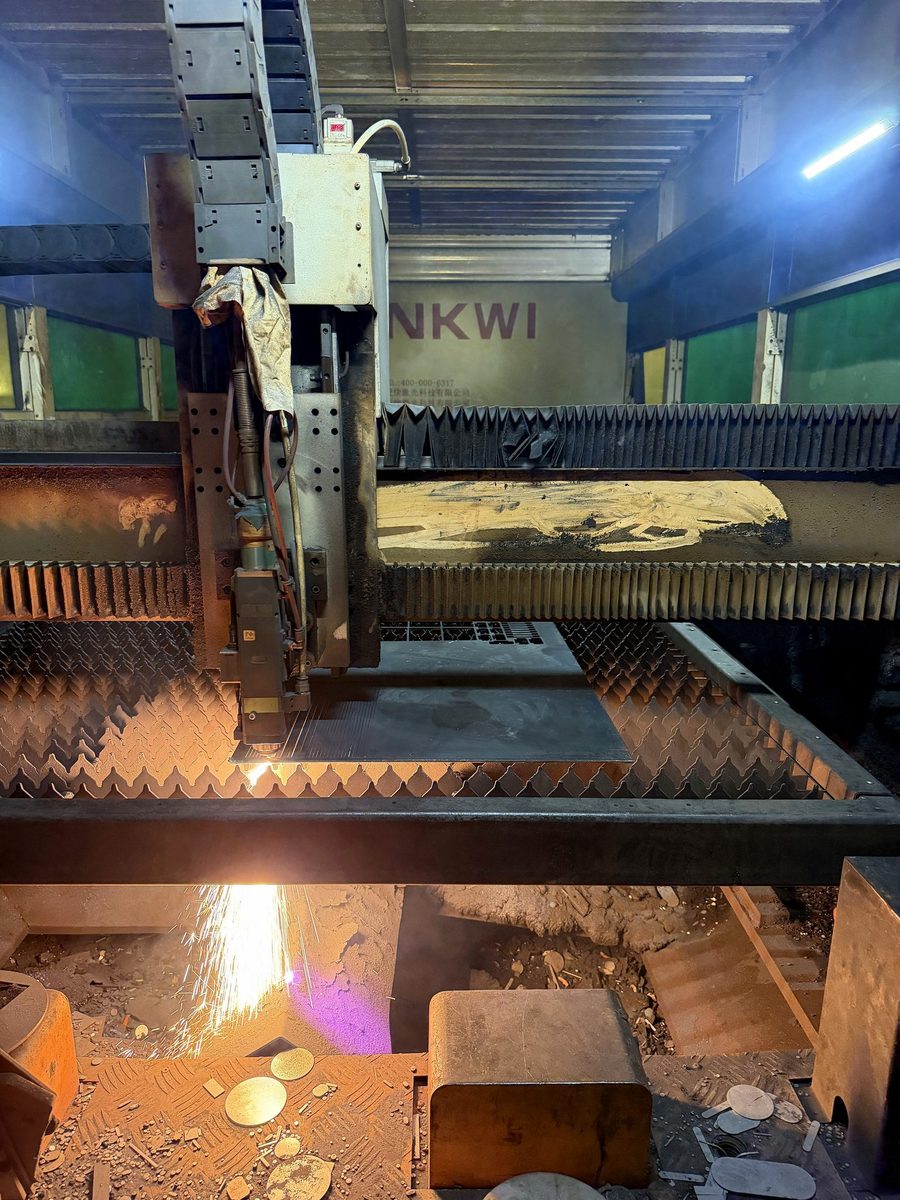 How it's builtEvery panel on this body starts as a nested sheet on the laser bed.
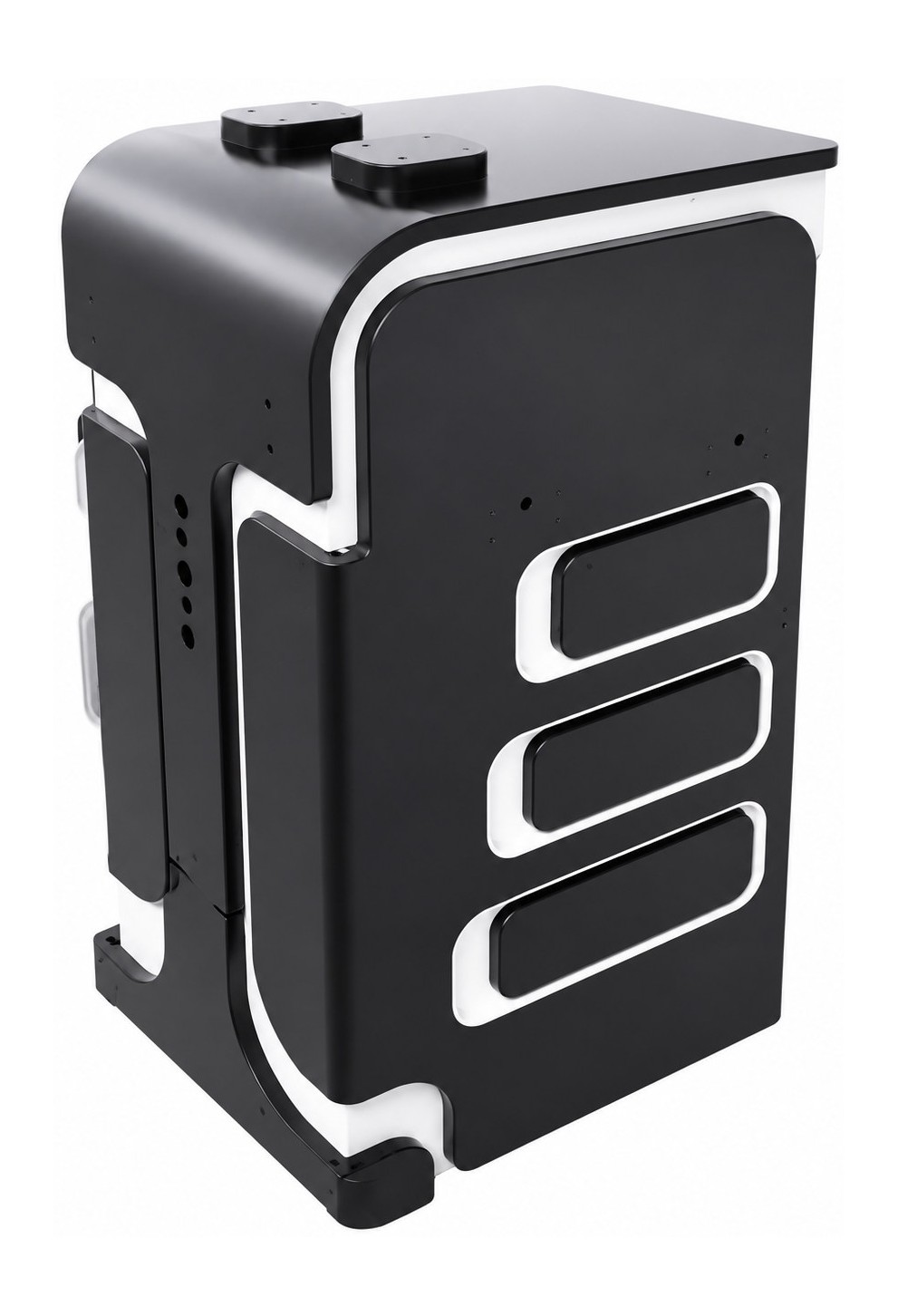
Bench and floor instrument bodies with multiple window cut-outs, mounting bosses on top and levelling feet below. The outline tolerance is loose by sheet metal standards; the hole positions are not, because a display, a connector panel and a PCB all locate off the same datum.
Two bodies in this range
The black housing further up is the flat-front body: a rectangular box with the window apertures on one plane. The white cabinet below is the other way this range gets built — a rounded body with a recessed cavity instead of a flat front, a mounting plate inside the cavity, and a dark base that carries the feet. Both take the same aperture tolerance; the difference is what the instrument has to look like on the bench in front of a customer.
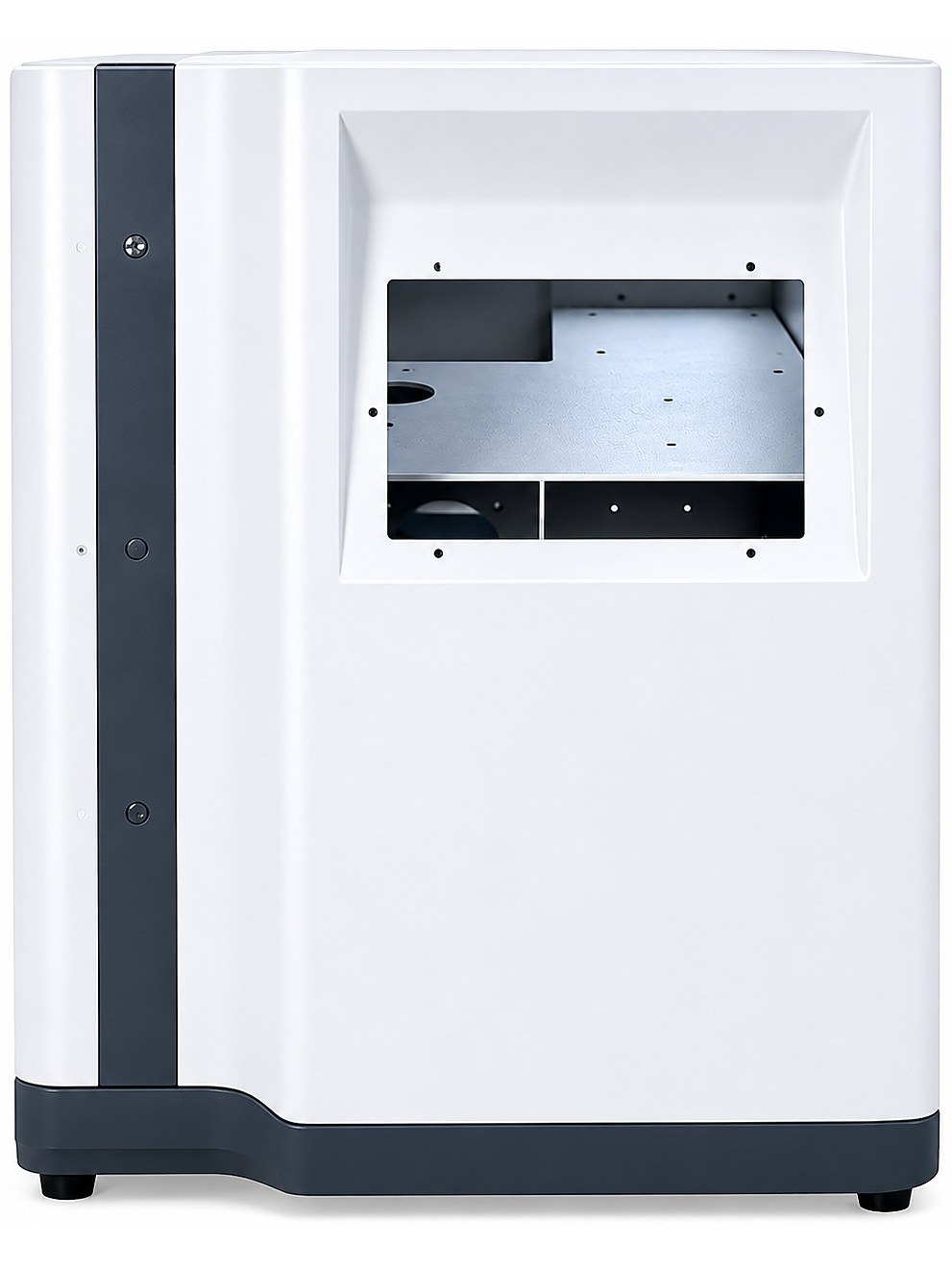 How it is builtThe cavity opening and the mounting plate are cut off one datum, so a plate moved between cabinets still lands.
The recessed cavity is the part that decides the build. Its four walls are folded from a single panel rather than welded from four pieces, because four welds means four lines that pull as they cool, and the mounting plate then sits at four different depths around its edge. Folding gives one depth. The plate itself is located off the cavity, not off the outside skin, so a cabinet that is slightly out at the back still holds its plate square.
The dark base is not decoration. It carries the feet and the load of the whole body, and it means the cosmetic face never has to sit on the floor during assembly. On a cabinet that will be wiped down and looked at closely, keeping the painted face off the ground until the last step is worth more than the extra part.
In an instrument body the hole position is the specification
Nobody measures whether a 300 mm wide instrument body is 301 mm. What gets measured is whether the display window lines up with the panel behind it and whether the connector cut-outs sit over the right sockets. On a body like this the outline can move a millimetre and nothing fails, while a window that moves 0.5 mm will not assemble. The drawing has to say which is which, and it usually does not.
One set-up, not three
Three vertically stacked window apertures cut in three separate passes accumulate their own positioning error, and the third window carries the error of the first two. Cutting every aperture on one face in a single nesting, off one datum, is what keeps the stack aligned. It costs nothing extra on a fibre laser and it removes the tolerance stacking that causes rework.
The mounting boss
The bosses on the top face are where the instrument's own bracket or the customer's mounting plate attaches. They are welded or riveted first, then the screw holes are machined after forming, so the hole position is referenced to the finished body rather than to a flat blank. A boss hole drilled before forming moves when the face bends.
Why the black textured finish earns its cost
A fine textured black powder coat hides two things a gloss black shows immediately: the grind marks left where a weld seam was dressed, and fingerprints from the operator who moves the unit every day. On instrument bodies that sit on a bench in front of customers, the texture is doing work, not decoration.
Technical Specifications
| Material | SPCC or SECC |
|---|---|
| Thickness | 1.0 - 1.5 mm |
| Surface | Black fine-textured powder coat, or custom RAL |
| Hole tolerance | +/- 0.2 mm on aperture positions |
| Apertures | 1 to 5 windows per face, cut in one nesting |
| Mounting | Top bosses, levelling feet or rack ears |
| Protection | IP40 to IP54 depending on aperture treatment |
| MOQ | 30 pcs |
Typical Applications
- Test and measurement instruments
- Analyzers and detectors
- Power supplies and inverters
- Industrial PCs
- Control heads and HMIs
Related Products
Get a quote for Instrument & Equipment Housings
Tell us quantity, material and surface finish — we reply within 24 hours with price and lead time.