
Medical & Equipment Housings
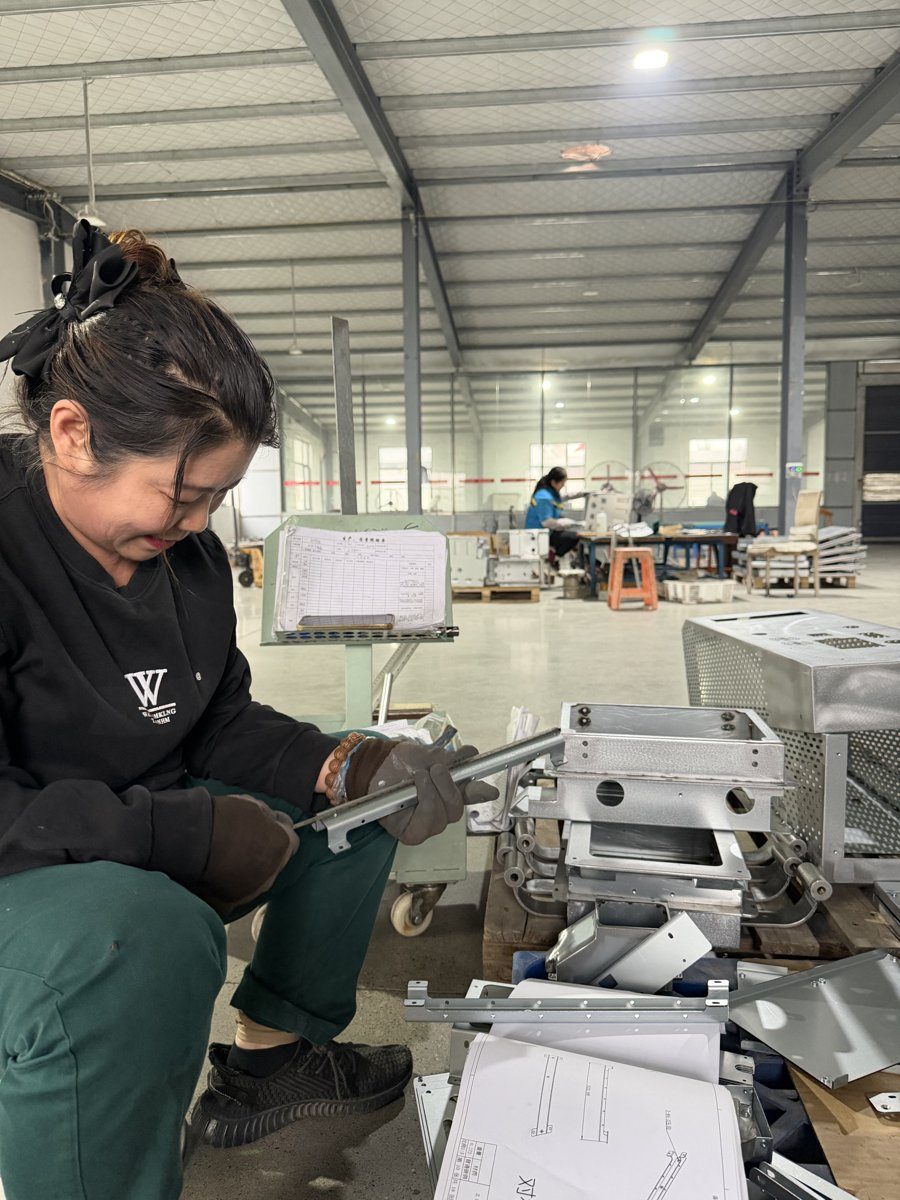 How it's builtMeasured against the drawing before this body is packed.
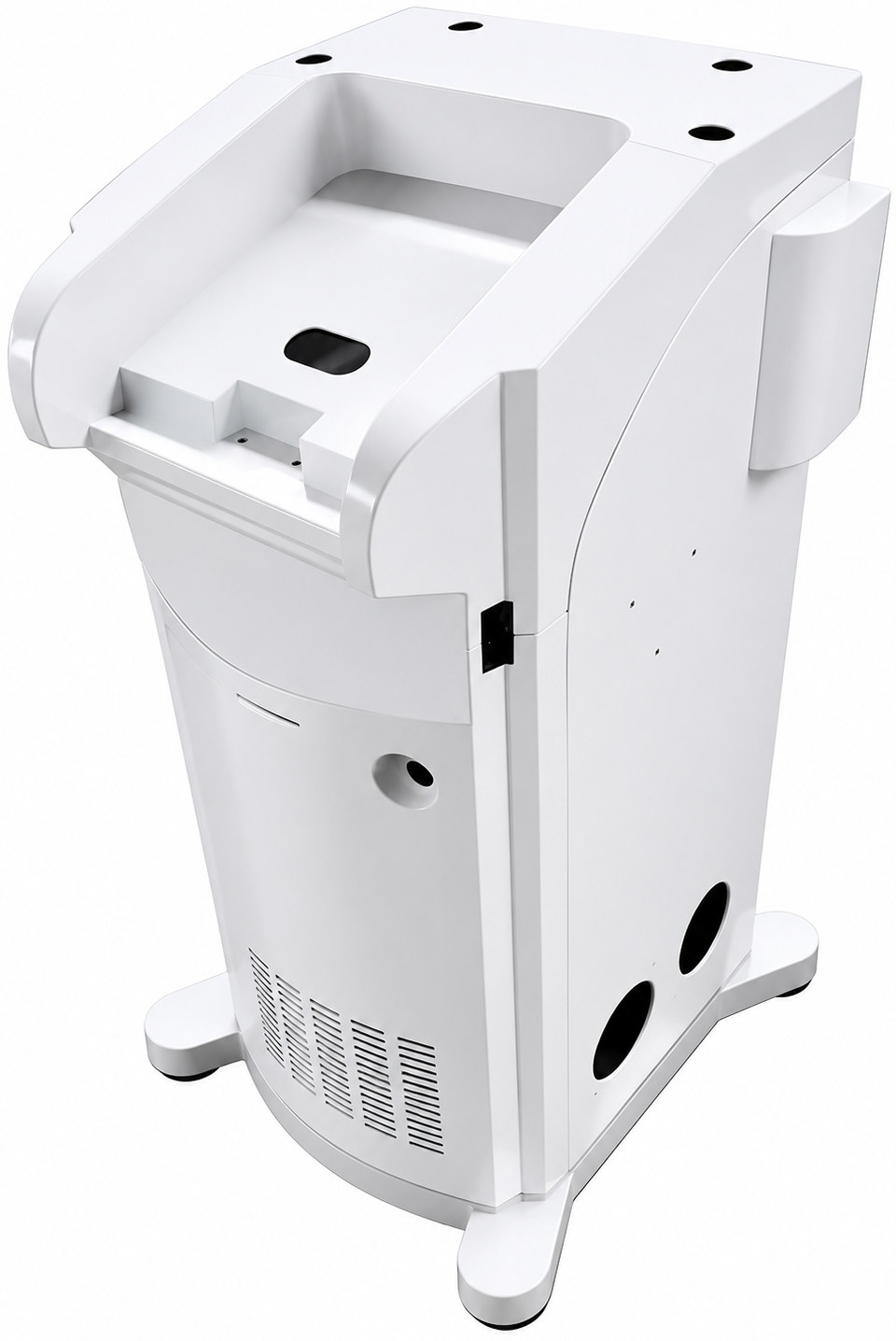
White powder-coated analyzer bodies with open top wells, machined corner radii and vent louvres. We build these to drawing for IVD instruments and laboratory equipment, where the surface has to survive daily disinfection and the clean face carries no exposed screws.
A medical housing is a cleaning problem before it is a sheet metal problem
Hospital and laboratory cleaning agents are not neutral. Chlorine, alcohol and quaternary ammonium compounds are used daily on the same surface, and a standard polyester powder coat will lose gloss and eventually chalk under that regime. The coating on a medical housing is selected for what will be wiped on it, not for how it looks on the day it ships.
Geometry matters as much as chemistry. Every exposed screw head, every joint gap and every concave corner is a place where residue sits and a wipe cannot reach. That is why these bodies run with hidden fasteners on the clean face, seams closed rather than butted, and rounded corners instead of square internal angles.
The corner radius you cannot fold
A folded internal corner has a radius set by the tooling and the sheet thickness. Push it below about 1.5 times the thickness and the outer fibre cracks. Medical housings want R3 to R5 so a cloth passes through the corner, and at that radius on 1.5 mm steel the corner is usually machined or rolled rather than folded. That changes the process routing and the price, and it is the first thing to settle before quoting.
The open top well
The open well at the top of an analyzer is where a sample tray, reagent carousel or pipetting head sits. Its wall straightness and floor flatness decide whether a tray seats in one movement or needs nudging, and whether the instrument's own alignment reference stays valid. We hold the well to the drawing datum rather than to the outside of the box, because the outside is never what the instrument locates from.
Vent louvres that keep the IP rating
Analyzer electronics need airflow and the enclosure still has to pass a washdown or splash test. Louvres are formed so water entering the opening turns before it reaches the interior, and the louvre bank is positioned away from the well so a spill at the top does not run into the electrics.
Technical Specifications
| Material | Cold-rolled steel, 304 stainless optional |
|---|---|
| Thickness | 1.2 - 2.0 mm |
| Surface | Medical white powder coat, RAL 9016, or 304 brushed |
| Protection | IP54 standard, IP65 optional |
| Corner radius | R3 - R5, machined or rolled where folding cannot reach |
| Fastening | Hidden screws on the clean face |
| Top well | Open well built to drawing datum, flatness checked |
| MOQ | 50 pcs |
Typical Applications
- In-vitro diagnostic analyzers
- Sample handling workstations
- Imaging equipment frames
- Laboratory instruments
- Point-of-care devices
Related Products
Get a quote for Medical & Equipment Housings
Tell us quantity, material and surface finish — we reply within 24 hours with price and lead time.