
Ventilated Electronics Cabinet
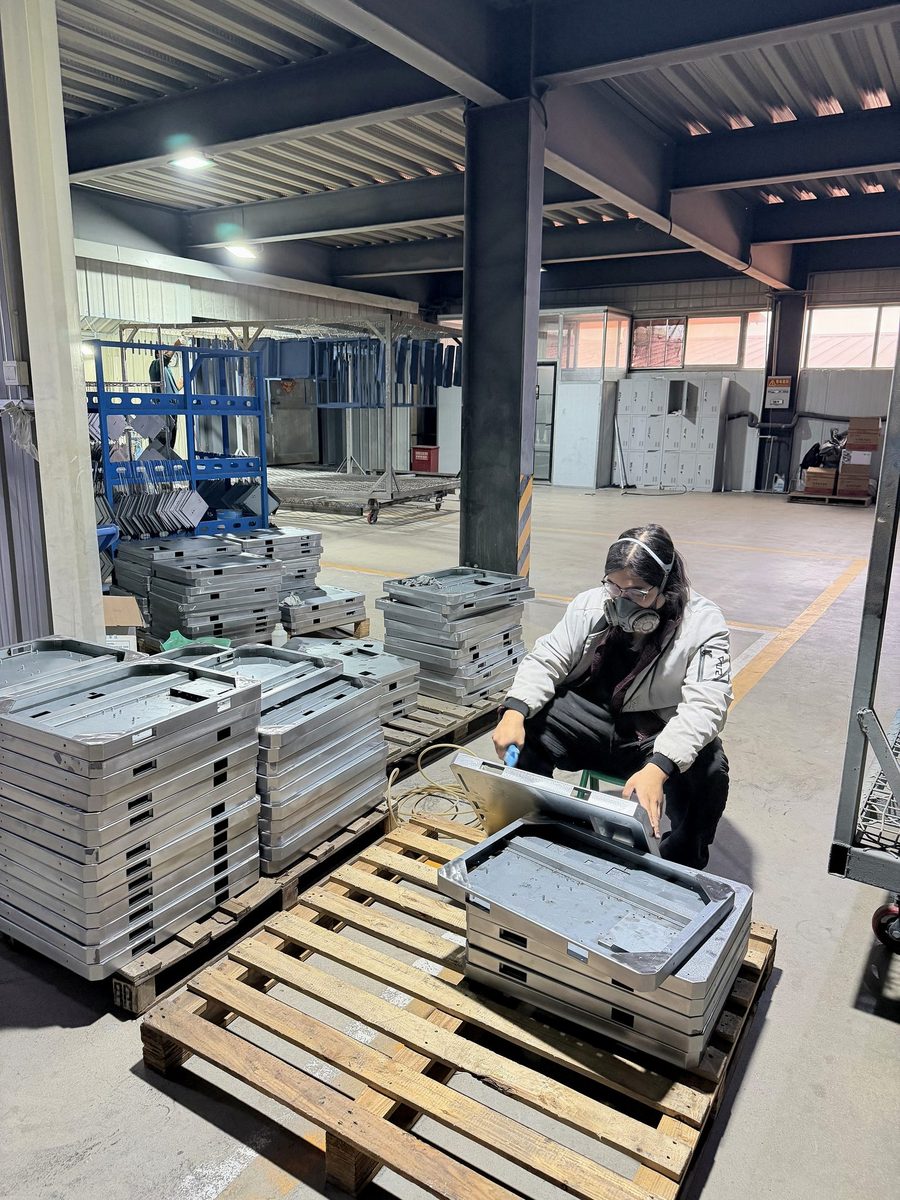 How it's builtThe louvre field and the side ports are cut and bored before the last fold, so every slot keeps its pitch.
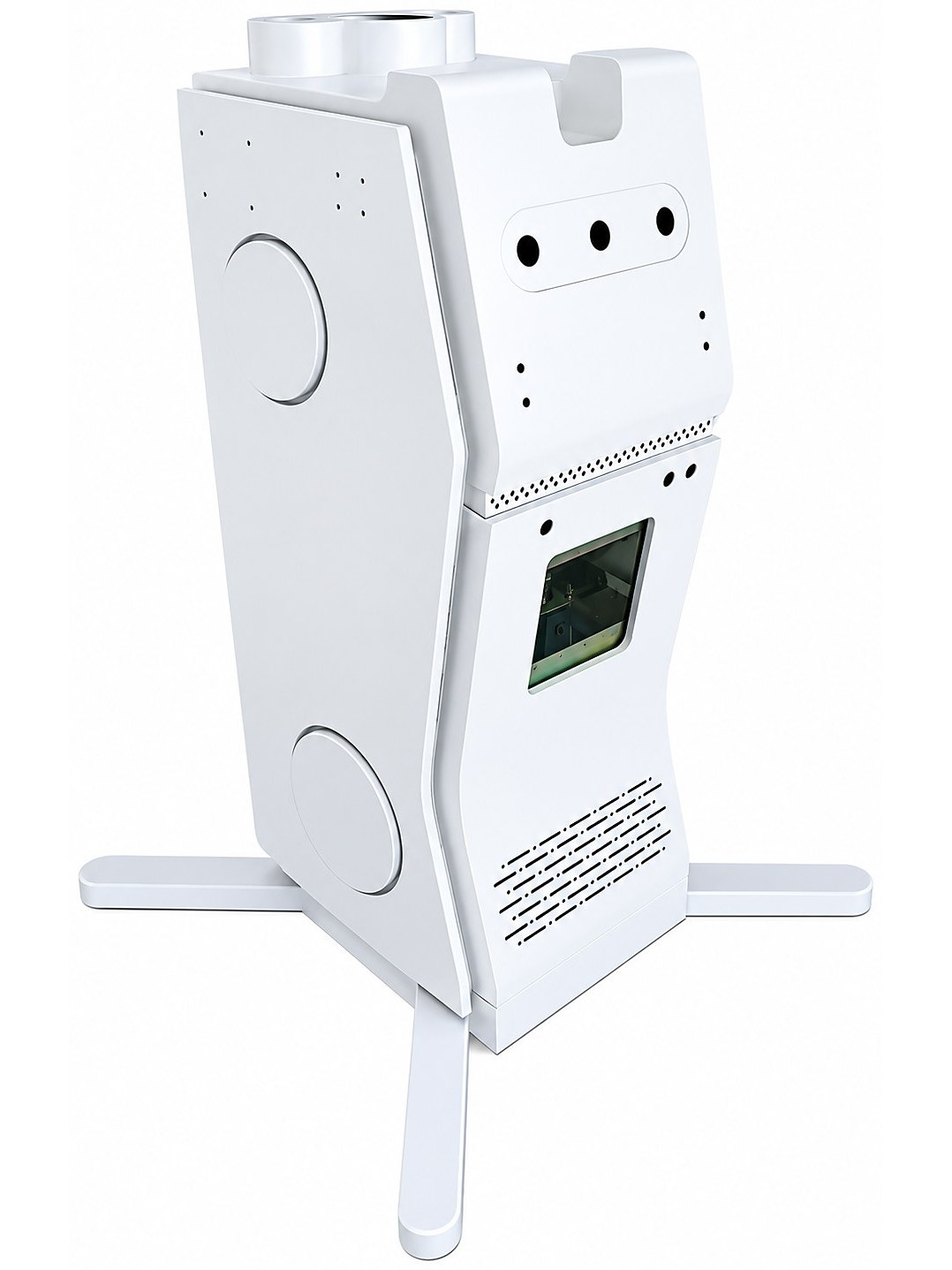
A cabinet built around an air path rather than a box with a fan bolted on: a measured intake field, ducted side ports, and a window that stays an inspection point instead of becoming a lid.
A ventilated cabinet is an air path with a box built around it
Most enquiries about a ventilated cabinet start with the fan. The fan is usually the last thing that matters. What decides whether the cabinet works is the free area of the inlet against the free area of the outlet, and whether the air is routed past the components that generate the heat or merely past the front door. If the intake is half the area of the exhaust, the fan runs in a vacuum and the internal temperature climbs anyway — and no fan upgrade fixes a duct that was never laid out.
The louvre field is a measured area, not decoration
The perforated field on the front and lower faces is the intake. Its job is to deliver a known free area — typically 40 to 50 percent of the panel — without letting a finger, a screwdriver or a falling bolt through. The slots and the pitch between them are cut in a single strike before the panel is folded. Cutting after forming shifts the pitch on the radius and closes the outer rows, which is the defect you see most often on a cheap cabinet: the pattern looks right and the airflow is 30 percent short.
The round ports are machined after the fold, not before
The two large circular ports on the side face are where an axial fan, a cable gland plate or a duct stub attaches. Because they have to sit concentric with the fan hub, they are bored after the body is formed and welded, off the finished face — not punched into a flat blank. On a flat blank the hole is correct only if the bend radius and the springback happen to land exactly where the model said they would, which is not something to design around.
The window stays optical, the panel behind it stays structural
A viewing window over a live circuit board is an inspection point, not a lid. The frame around it carries stiffening ribs, and the internal mounting panel is located off its own datum rather than off the window opening, so a board that has to be removed for service slides out without the window frame moving. Acrylic is the default; tempered glass where the window will be wiped with solvent or hit by a tool.
Where the tolerance is actually spent
On this cabinet the outline is loose and the hole positions are not — the same rule that applies to any instrument body. The difference is that a ventilated cabinet also has to hold a door line across a long opening. A door that binds at one corner usually means the body was welded before the aperture was finished, so the frame pulled as the weld cooled. Finishing the aperture first and welding the frame after is the cheaper of the two ways to avoid it.
Technical Specifications
| Material | SPCC cold rolled steel, SECC, or galvanised sheet |
|---|---|
| Thickness | 1.0 – 2.0 mm body, 2.0 mm base frame |
| Surface | Powder coat, any RAL, fine texture or smooth |
| Louvre free area | 40 – 50% of panel, cut before forming |
| Fan / cable ports | Round ports 60 – 300 mm, bored after forming |
| Internal mounting | Welded studs or removable panels on their own datum |
| Viewing window | 3 – 5 mm acrylic, or tempered glass on request |
| Protection | IP54 with gasket; IP42 louvred without |
| MOQ | 30 pcs |
Typical Applications
- Power electronics and inverter housings
- Test rigs and bench instruments
- Network, telecom and edge computing equipment
- Industrial drive and control housings
- Battery, charger and power conversion cabinets
Related Products
Get a quote for Ventilated Electronics Cabinet
Tell us quantity, material and surface finish — we reply within 24 hours with price and lead time.