
Wheeled Flight Case
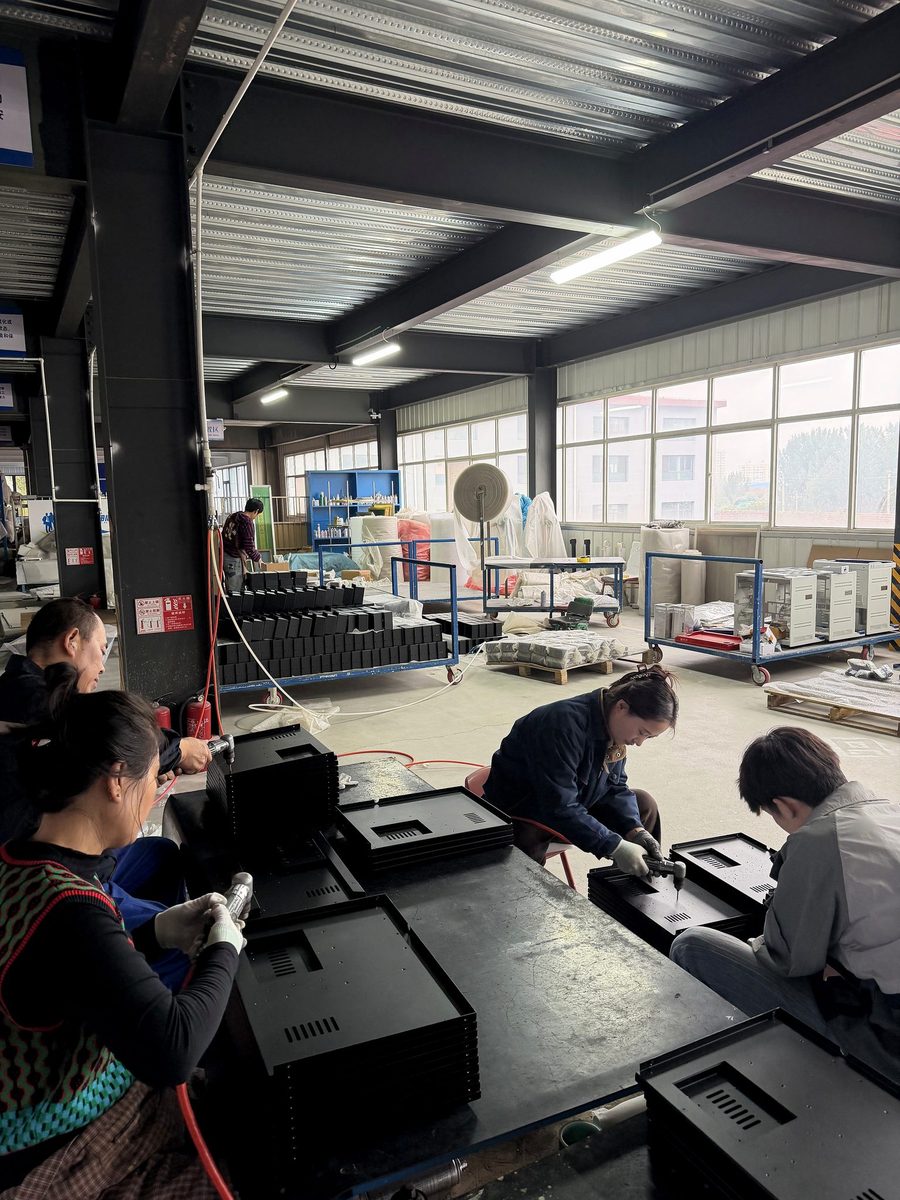 How it's builtEdging, latches and castors are fitted after the lid line is checked straight, so the seal closes on a true edge.
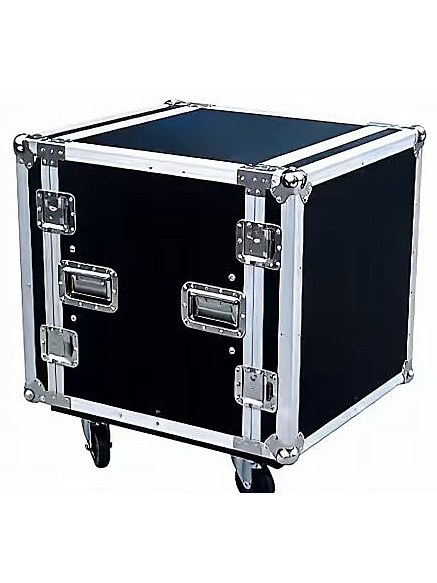
A transport envelope built from the equipment outwards: perimeter aluminium edging that takes the drop, a base frame that carries the castors, and a lid line checked before the gasket goes on.
The case is an envelope; what it protects is the product
A flight case is judged by what is inside it after the journey, not by the case itself. Everything on the outside of this box exists to absorb energy that would otherwise reach a rack ear, a front panel or a lens: the aluminium extrusion that carries the corners, the laminated panel that takes the point load, the castors that keep the base off the ground. A case that looks heavier than the equipment is the case that did its job.
Aluminium edging is what actually takes the impact
The extrusion runs the whole perimeter of every face, not just the corners. A drop lands on an edge or a corner, and a case edged only at the corners transfers that load straight into a panel joint. The corner balls distribute the hit across three faces at once; the flat extrusion either side carries it along the seam. This is the part of the build that cannot be simplified without the case failing on its fourth trip rather than its first.
The base frame and the castors
The castors do not hang off the panel. They mount to a base frame that spreads the load across the bottom face, because a 9 mm laminated panel with a 60 kg castor bolted through it will delaminate at the bolt hole within a season of touring. Two castors braked, two free, is the usual arrangement; four braked on a case that will be loaded on a ramp.
Latches, handles and the lid line
Butterfly latches pull the lid down onto the gasket with a cam action, which is why they hold a seal that a draw latch cannot. Two latches on a short case, four on a long one. The recessed handles sit flush so the case can slide against another case without catching, and the lid line has to be straight before the extrusion goes on — a lid that was cut short is a lid that leaks, and the gasket hides the gap without closing it.
Inside: foam, or a rack
A case carries either foam cut to the equipment outline, or 19 inch rack rails on which the equipment travels as it would in a rack. The foam version is cheaper per case and better for instruments with a fragile front face; the rack version lets the same case hold different equipment on different trips. Which one you want depends on whether the contents change, not on the budget line.
What to send with the enquiry
Give the equipment outline with its mounting points, the total travelling weight, whether the case is going in an aircraft hold or a van, and the internal arrangement — foam, rack, or drawers. The case is sized from the equipment, never the other way round.
Technical Specifications
| Panel | 9 mm laminated plywood or PVC honeycomb panel |
|---|---|
| Edging | Aluminium extrusion, full perimeter, ball corners |
| Latches | Butterfly latches, 2 or 4 per case |
| Handles | Recessed steel or aluminium |
| Castors | 4 swivel, brake count per drawing |
| Internal | Cut foam, divider set, or 19 inch rack rails |
| Gasket | Sealed lid line, dust and splash resistant |
| Size | Built to the equipment outline, not to a stock size |
| MOQ | 20 pcs |
Typical Applications
- Rack and IT equipment transport
- Broadcast and AV production gear
- Test instruments carried between sites
- Trade show and demo kits
- Field service tool and spares kits
Related Products
Get a quote for Wheeled Flight Case
Tell us quantity, material and surface finish — we reply within 24 hours with price and lead time.