Cabinet Lock Types: Cam Lock, Handle Lock, Swing Handle
Which lock for your enclosure?
Three lock families, and what each one actually protects
A lock on an enclosure does two different jobs, and buyers usually mean only one of them. It can keep an honest person from opening the wrong door, or it can resist a person who intends to get in. A cam lock does the first. A swing handle with a compressed gasket does a bit of the second, and most of what it really does is hold the door shut against weather.
That distinction decides the choice more often than security rating does. An indoor cabinet in a plant room with authorised staff needs a lock that signals 'closed' and keeps the door from swinging open when a machine vibrates. An outdoor cabinet on a roadside needs a lock that holds a gasket under compression for years and does not corrode shut.
Cam lock
A small cylinder with a rotating cam bar behind the door. Cheap, light, and it fits a 16 or 20 mm cutout, which means almost any enclosure can take one. The security is low: the cam is visible from outside, the cylinders are commodity items, and the same key blank is sold by every hardware supplier.
Where it belongs: wall-mount enclosures, indoor junction boxes, access panels that carry no valuable equipment, and any door opened daily by the same person. Where it does not: outdoor service, anything with a gasket that needs even compression, and anything where 'locked' has to mean something.
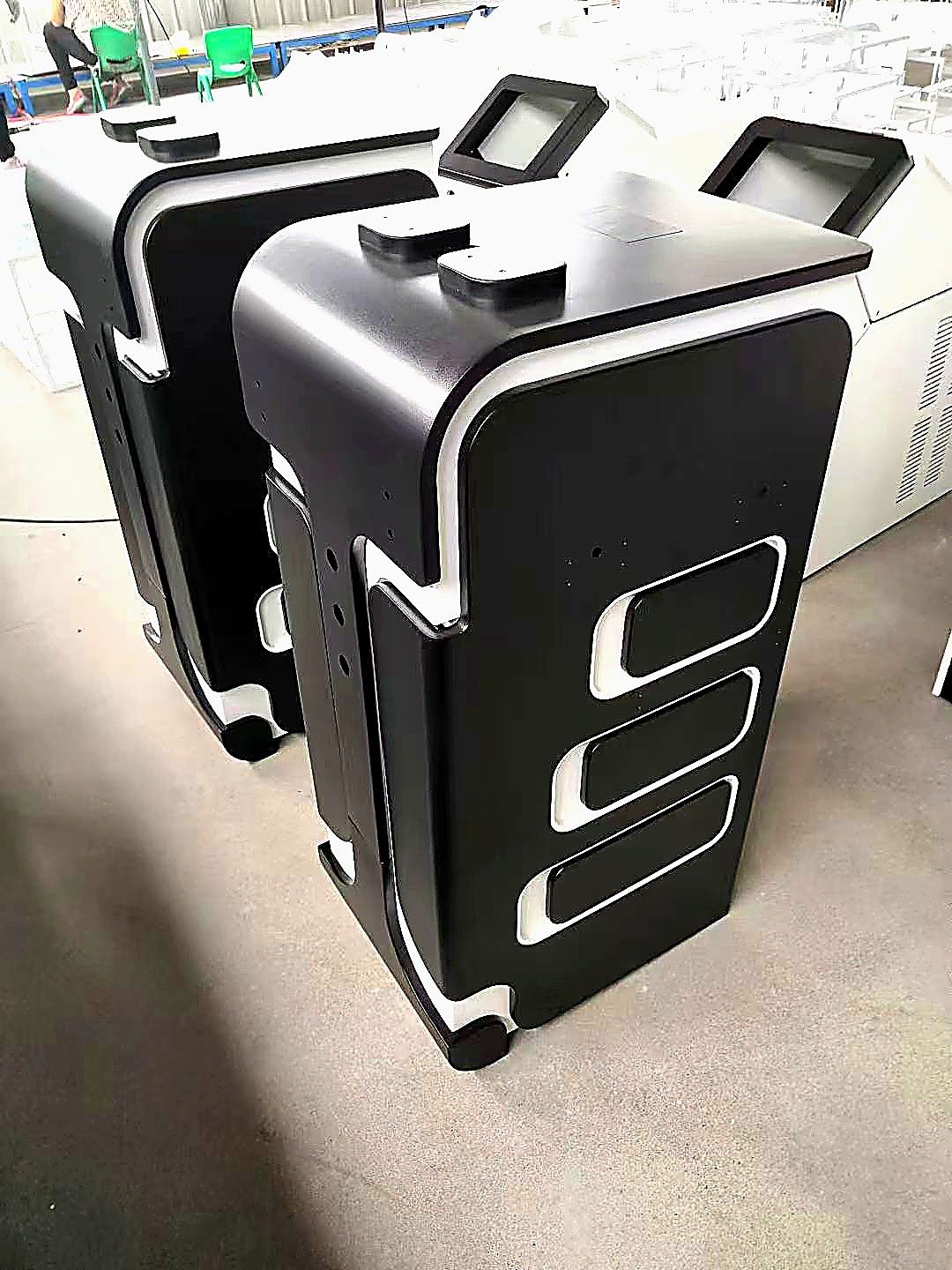
 How it's builtTwo-tone builds get a dimensional check before the panels are mated.
Handle lock
A metal handle with an integrated lock. The grip is better, the door closes with more force, and the lock body is larger, so picking is harder than on a cam lock. It is the default on floor-standing cabinets because a 1.8 m door with a cam lock flexes when it is pulled, and the flex is what eventually loosens the gasket.
The handle also gives the door a place to hang a padlock or a hasp, which is how a lot of buyers actually secure a cabinet: the built-in lock for daily use, a padlock for weekend and site security. Specify the hasp at the drawing stage, because adding one after coating means drilling a finished door.
Swing handle, quarter turn
A large handle that rotates a quarter turn and drives a mechanism that compresses the gasket along the whole door edge. This is the only one of the three that is part of the enclosure's sealing system rather than an addition to it. It is also the one that can be specified with a multi-point latch, so a 2 m door closes flat instead of bowing.
Where it belongs: outdoor cabinets, washdown areas, anything rated IP65 or above, and any door large enough that a single cam would let the far edge lift. The cost is real, and so is the reason: a gasket that is compressed by a quarter-turn mechanism stays compressed, while a gasket held only by a cam lock relaxes over time and the rating quietly degrades.
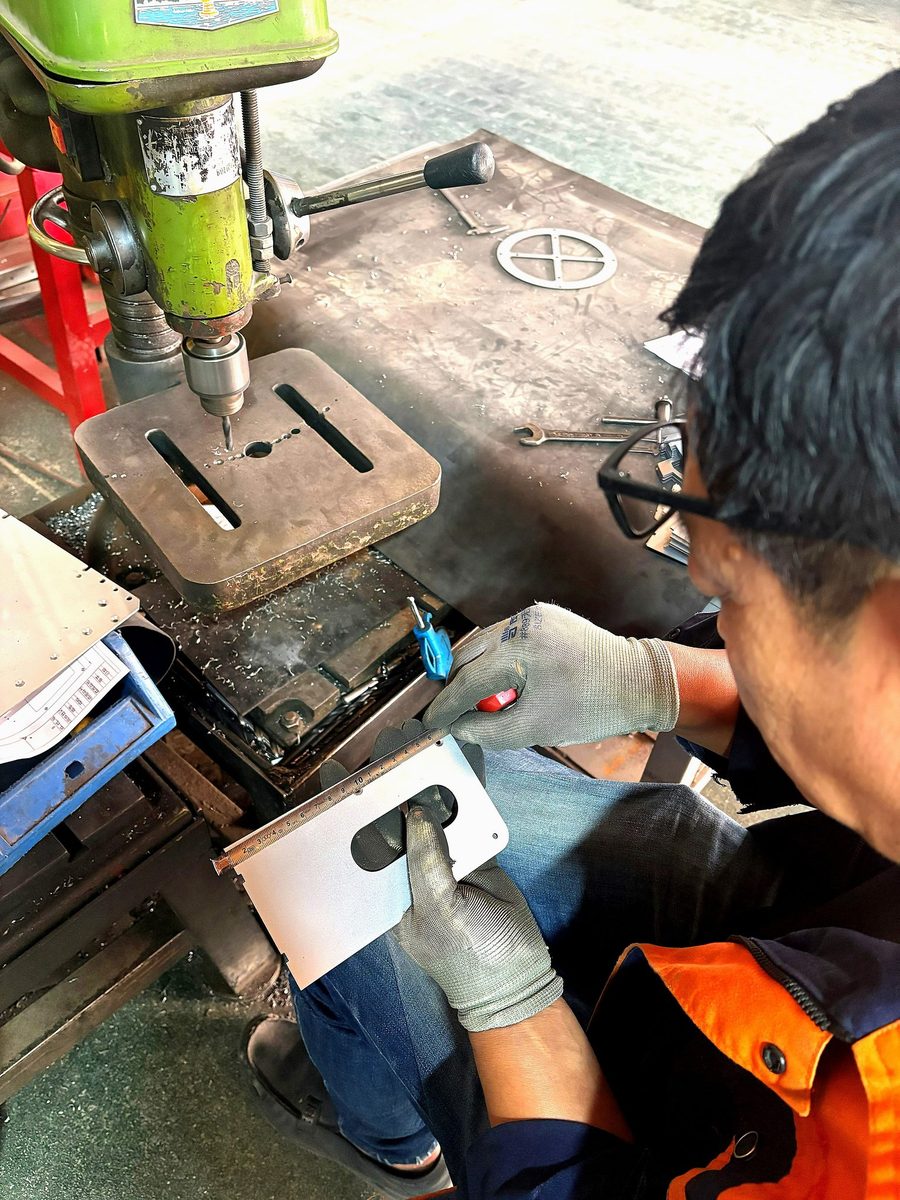
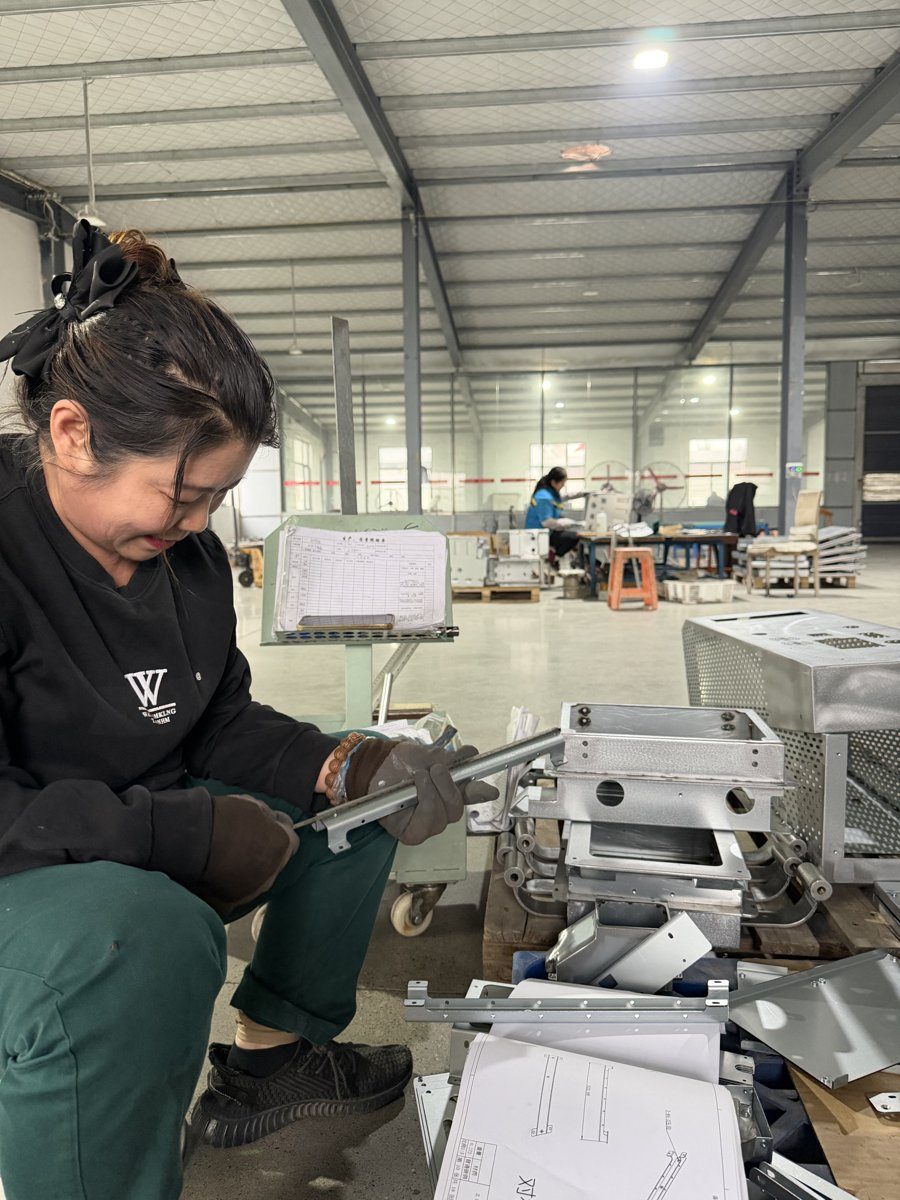
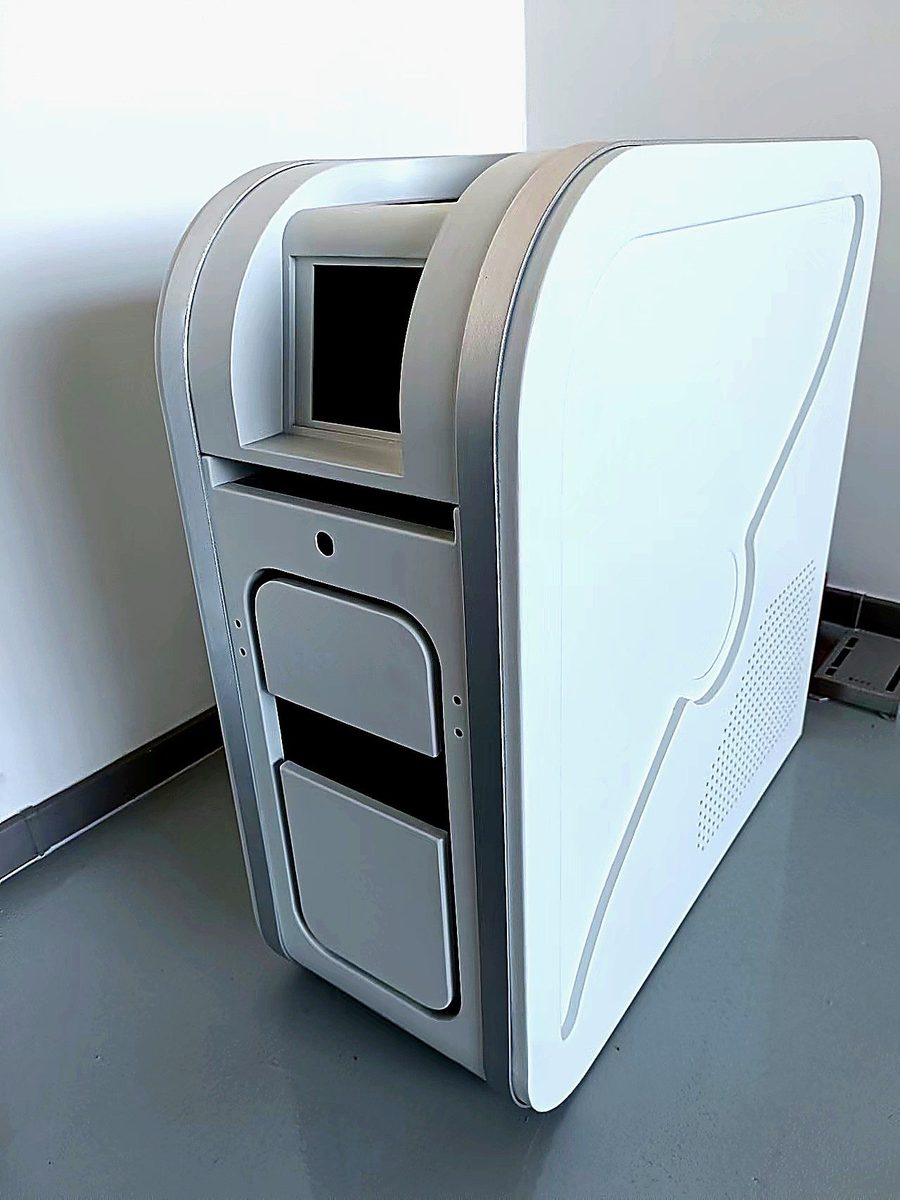 What it becomesMachined detail, assembled into the housing.
Keying, and the decision that is easy to get wrong
Three options: all locks keyed alike, each lock a different key, and tool-less (a quarter-turn latch opened with a coin or a screwdriver). Keyed alike is right when one person maintains many cabinets, because one key opens the estate. Different keys are right when different people should not open each other's equipment.
Tool-less is right for cabinets that hold nothing valuable and are opened by anyone authorised to be in the room. It is also the option most often chosen by accident: a latch without a key cylinder looks like a cost saving until someone asks why the door opens with a screwdriver.
The part buyers forget
The lock is a hole in the door. That hole has to be cut before coating, it has to match the lock's cutout, and it has to be positioned so the handle does not foul a DIN rail behind it. A lock chosen after the cabinet is built is a second operation on a finished surface.
State three things on the drawing and the specification is settled: the environment (indoor, outdoor, washdown), the security intent (keep closed, or resist entry), and the keying policy. The lock model follows from those, and it stops being a line item that gets substituted at the last minute.
Related reading
Need this built to your drawings? Send us your PDF or STEP file — engineers reply within 24 hours.
Request a Free Quote →